Ring sizing · Pillar guide
Ring Size Chart & How to Measure
~9 min read

Everything you need to size a ring without guessing: a full conversion chart across US, UK, EU, and Japan, three at-home measuring methods, and the tactics that actually work for sizing a surprise proposal. All values are cross-checked against GIA and ISO 8653, so the numbers below will match what any reputable jeweler reads off their own set of sizing rings.
Short on time? Scroll to the chart, print it, and lay the ring on top. The rest of this page is here for when you need to measure a finger without the ring, or figure out what size they wear in a country with a different scale.
Quick reference chart
Rows run from US 3 through US 13 in half-size increments. Inside diameter and circumference are the two measurements that actually define a ring size. Everything else (US numbers, UK letters, EU numbers, JP numbers) is a regional label on top of those mm values.
| US / Canada | UK / AU / IE | Europe (ISO) | Japan | Diameter (mm) | Circumference (mm) |
|---|---|---|---|---|---|
| 3 | F | 44 | 4 | 14.0 | 44.2 |
| 3.5 | G ½ | 45.5 | 5 | 14.4 | 45.5 |
| 4 | H ½ | 47 | 7 | 14.8 | 46.8 |
| 4.5 | I ½ | 48 | 8 | 15.2 | 48.0 |
| 5 | J ½ | 49 | 9 | 15.7 | 49.3 |
| 5.5 | K ½ | 51 | 10 | 16.1 | 50.6 |
| 6 | L ½ | 52 | 12 | 16.5 | 51.9 |
| 6.5 | M ½ | 53 | 13 | 16.9 | 53.1 |
| 7 | N ½ | 54 | 14 | 17.3 | 54.4 |
| 7.5 | O ½ | 56 | 15 | 17.7 | 55.7 |
| 8 | P ½ | 57 | 16 | 18.1 | 57.0 |
| 8.5 | Q ½ | 58 | 17 | 18.5 | 58.3 |
| 9 | R ½ | 59 | 18 | 19.0 | 59.5 |
| 9.5 | S ½ | 61 | 19 | 19.4 | 60.8 |
| 10 | T ½ | 62 | 20 | 19.8 | 62.1 |
| 10.5 | U ½ | 63 | 22 | 20.2 | 63.4 |
| 11 | V ½ | 65 | 23 | 20.6 | 64.6 |
| 11.5 | W ½ | 66 | 24 | 21.0 | 65.9 |
| 12 | X ½ | 67 | 25 | 21.4 | 67.2 |
| 12.5 | Y ½ | 69 | 26 | 21.8 | 68.5 |
| 13 | Z | 70 | 27 | 22.2 | 69.7 |
Values follow ISO 8653 (inside circumference in mm) and the standard GIA reference chart. UK half-sizes are listed where the US half-size falls between two UK letters. Japan uses the JIS numeric scale.
How to measure your ring size at home
Three methods, ranked from roughest to most accurate. Any of them beats guessing, and the second one is within ±¼ size of what a jeweler will read off a professional sizer.
Method 1: String or paper strip + ruler
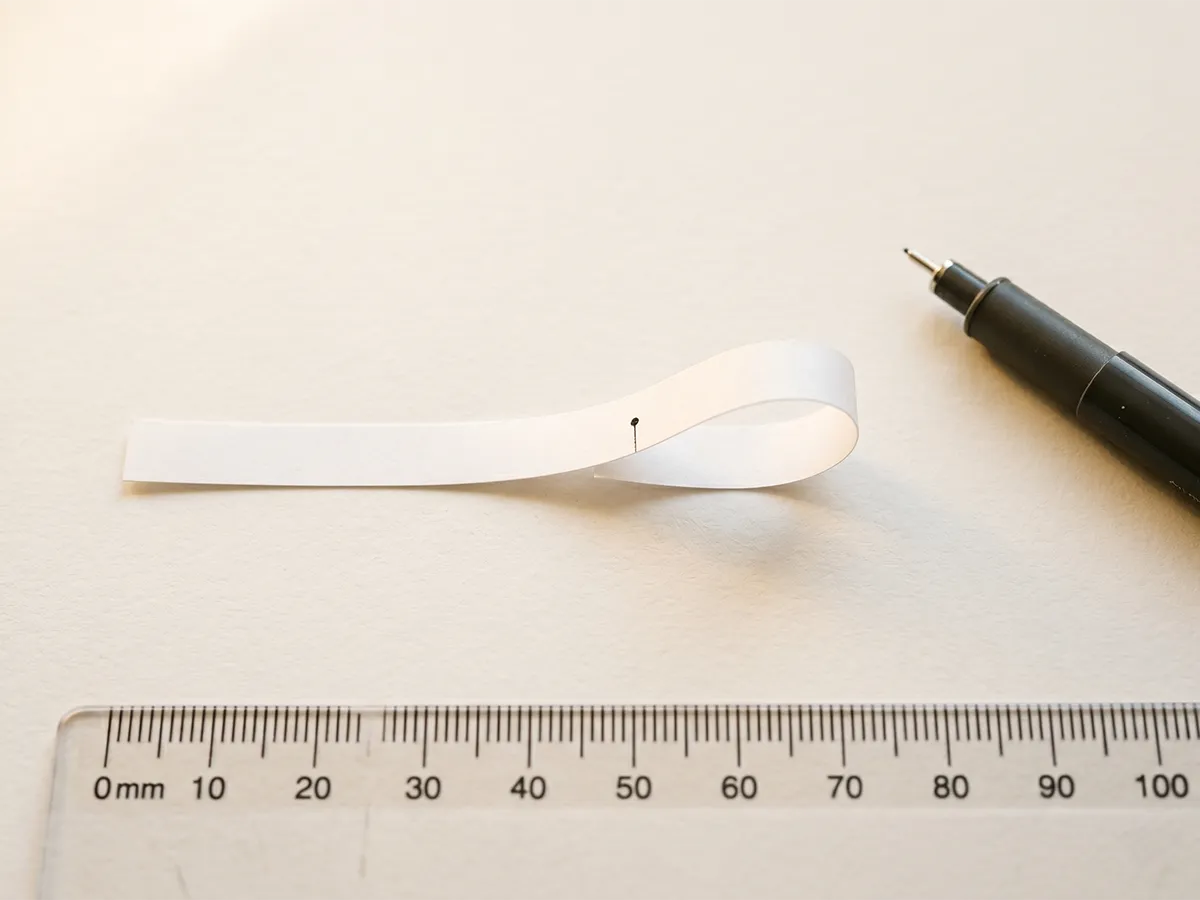
- Cut a strip of paper about 5mm wide and 100mm long, or use a length of non-stretch string.
- Wrap it around the base of the finger, where the ring will sit, snugly enough that it stops at the knuckle joint on the way off.
- Mark where the strip overlaps itself with a pen.
- Lay the strip flat and measure from the start to the mark in millimeters.
- That number is the inside circumference. Match it to the chart above.
Accuracy: roughly ±½ size. Quick tip: measure at the end of the day. Fingers are at their largest after a full day of activity; a measurement taken first thing in the morning can run half a size to a full size too small, which is how people end up with rings that get stuck every afternoon.
Method 2: Measure an existing ring

- Take a ring that already fits the target finger comfortably.
- Lay it flat on a table.
- Measure the inside diameter edge to edge, straight through the center, in millimeters.
- Match the number to the diameter column on the chart above.
This is the most accurate DIY method because you're skipping the wrap-and-mark step, which is where Method 1 loses precision. If the existing ring is a wide band (5mm+), size up by a quarter for a similar-width replacement, since wider bands sit tighter at the same nominal size.
Method 3: Free sizing at a jeweler
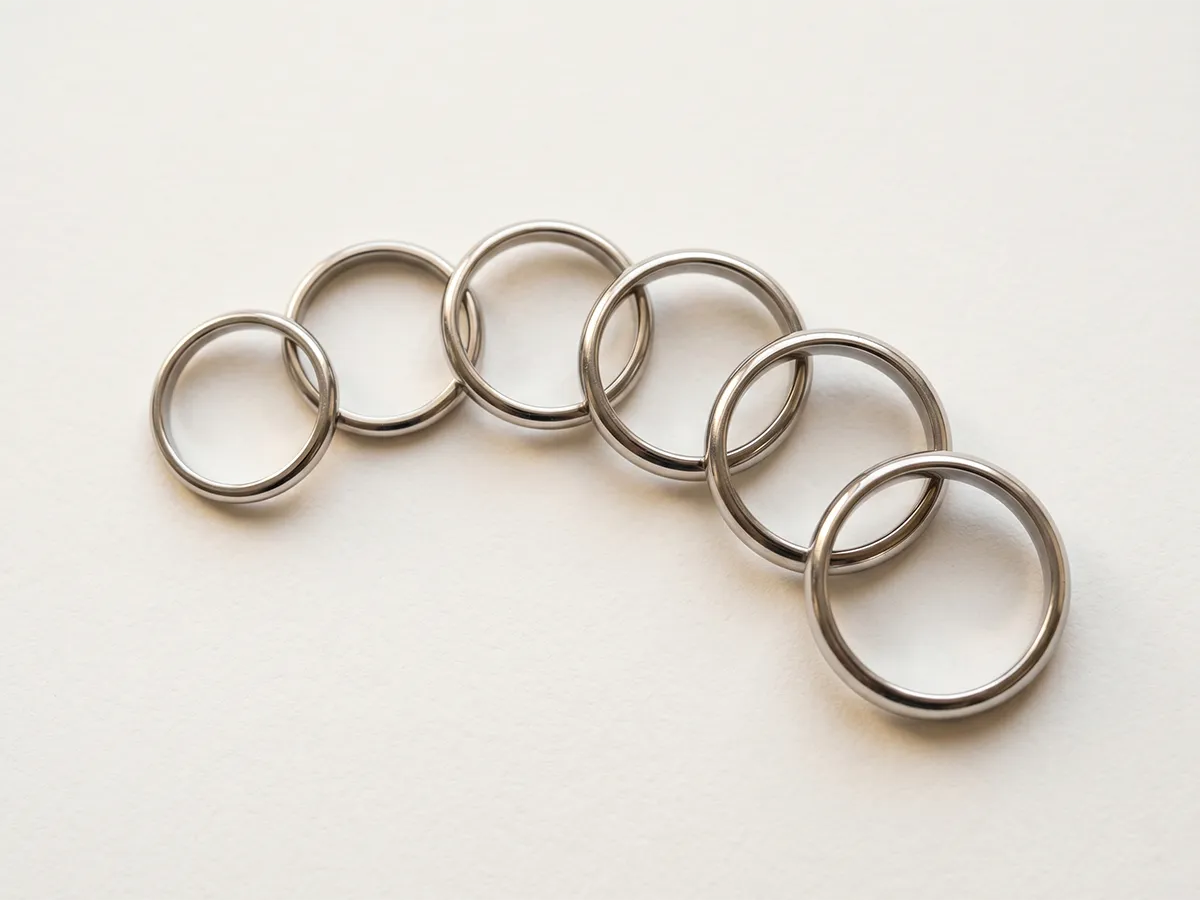
Any jewelry store will size a finger for free in about five minutes, using a graduated set of metal sizing rings (usually labeled in the local regional scale). No purchase expected, no appointment needed at most chains. This is the most accurate option and the obvious choice when the ring is for the person getting sized.
Not an option for a surprise proposal. For that, see the next section.
Sizing for a surprise proposal (without asking)
The trickiest part of a surprise proposal is usually not the ring style — it's getting the size right without tipping them off. Some tactics work better than others.
Tactic 1: Borrow a ring they already wear
The most reliable method. Find a ring they already wear on the target finger (almost always the left ring finger), ideally one they've worn for a while and doesn't slide around. Then do one of two things:
- Trace the inside circle on a piece of paper, then measure the diameter. Fast and low-risk.
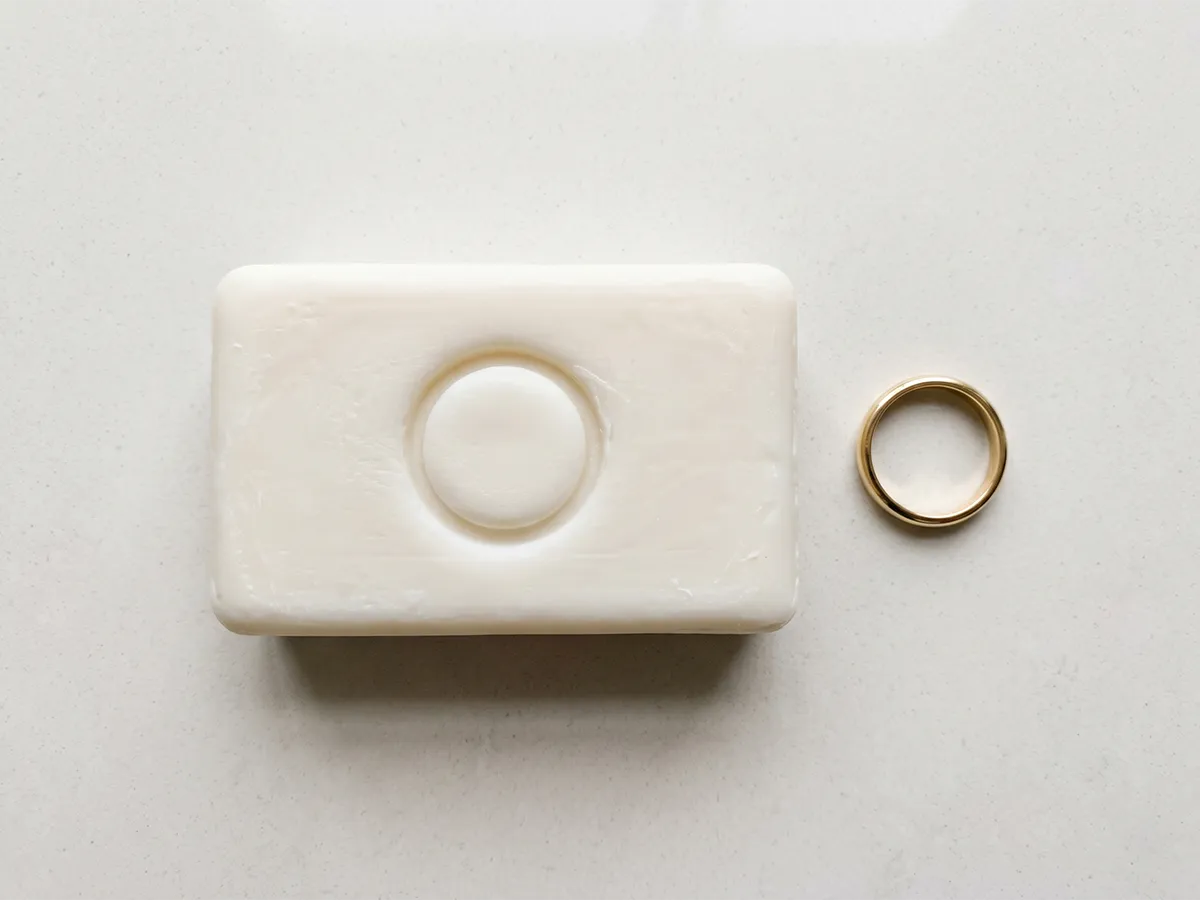
- Press the ring into a bar of soap to capture the inside diameter as an impression. Measure the circle in the soap with a ruler. This is the jeweler's classic trick — they'll still want the number in mm, but a soap impression gives them enough to work with if you can't do a direct measurement.
Tactic 2: Comparison against your own finger
Slide a ring of theirs onto your own finger (yes, even if it's way too small, and note where it stops). Later, at a jeweler, have them show you a sizing ring that stops at the same spot on your finger. Imprecise but useful as a backup if you can't borrow a ring long enough to measure it.
Tactic 3: Recruit a sibling or best friend
A sister, brother, mother, or close friend is often the lowest-risk route. They can casually suggest a jewelry-store visit ("let's browse"), or recall a past ring size. If they've ever been dress shopping together, the friend may already know.
Tactic 4: Just use the average and resize later
If all else fails, use the average. For the US:
- Women's average: US 6 (range 5–7)
- Men's average: US 10 (range 8–11)
Go with the average, and plan on a first resize after the proposal. Most online retailers (including Blue Nile, James Allen, and Brilliant Earth) offer one free resize within the first 12 months, specifically because so many proposal rings need one. Check the retailer's policy before you buy, and pick a setting that resizes well (see the table below).
Size conversion notes
A quick primer on the four scales in the chart, because they all measure the same thing (inside circumference in mm) with wildly different labels on top.
- US / Canada / Mexico: numeric scale from 3 to 13+ in whole and half sizes. One full size is about 0.4mm of diameter (1.27mm of circumference).
- UK / Australia / Ireland: letter scale from A to Z with half-letter increments (e.g., "N ½"). One UK letter is about half a US size.
- Europe (ISO 8653): the inside circumference in mm, rounded. "EU 54" means a ring with a 54mm inner circumference. The cleanest scale of the four because it is the physical measurement.
- Japan (JIS): numeric, but different from the US. JP 9 ≠ US 9. Always convert via the chart.
One warning: don't trust arbitrary "ring size converter" widgets on the open web. Many get EU wrong by a full size because the person who coded it assumed the EU number was a US equivalent. The ISO 8653 standard settles this. When two sources disagree, go with the circumference in mm.
Between sizes? Go up.
Fingers swell. They swell in heat, they swell after a salty meal, they swell during pregnancy, and the base gradually thickens over the years. A ring sized right for a cool morning in February will be unwearable on a humid August afternoon.
If the measurement comes out between two sizes, size up. A loose ring can be tightened with a ring guard, a spring sizer, or a straightforward resize down. Going the other direction is harder, and on eternity bands or tension settings it is not possible at all without destroying the setting. Up is almost always the safe call.
Which settings can be resized?
This matters for surprise proposals, because if you're guessing the size, you want a setting that can absorb a one-size correction without a major rebuild. Here's the quick version:
| Setting | Resizable? | Notes |
|---|---|---|
| Solitaire | Yes, easily | Up or down by 1–2 sizes with no complications |
| Halo | Yes | Harder if the pavé extends around to the shank |
| Pavé / full-pavé | Difficult | Stones on the shank must be removed and reset; costs more |
| Three-stone | Yes | Only the shank is worked; side stones stay put |
| Eternity band | No | Stones go all the way around; the band has no unset section to work on |
| Tension setting | No | Resizing releases the tension that holds the stone |
If you're unsure about the size and picking a design, a solitaire or three-stone gives you the most room to correct later. Eternity bands and tension settings are beautiful but demand an accurate size up front. More on which style to pick in our engagement ring styles guide.
FAQ
What's the most common ring size?
US 6 is the most common women's ring size and US 10 is the most common men's size. Both sit right at the middle of the normal range — women typically fall between 5 and 7, men between 8 and 11.
Can I measure my ring size with a printout?
Sort of. A printed ruler works if you verify the scale after printing (print at 100% and measure against a known object, like a credit card at 85.6mm wide). A printed paper-ring sizer with pre-cut slots is unreliable because home printers and paper stocks vary — we recommend the string-and-ruler method or sizing an existing ring instead.
They wear a 7 in the UK — what's that in US?
UK 7 is not a standard size on the UK letter scale. If they mean UK size N, that is roughly US 7. If they mean a 7 on a US chart sold in the UK, it stays US 7. Ask them to read the letter inside the band.
Do men's and women's ring sizes use a different scale?
No — same US numeric scale, same UK letter scale. Men's fingers just tend to be larger, so men's sizes skew higher (average US 10 vs women's US 6). There's no separate men's ring size system.
What if I'm between sizes?
Go up, not down. Fingers swell with heat, salt, and over the years. Sizing a band up is hard and sometimes impossible (eternity bands); making a ring tighter with a ring guard or resize is easy.
How much does ring resizing cost?
Simple resizes on a plain band run $25–$60. A halo or pavé with stones near the shank runs $75–$150. Three-stone and solitaires sit in the middle. Most online retailers (Blue Nile, James Allen, Brilliant Earth) offer one free resize within the first year.
Next steps
Start here
Engagement ring buying guide
How to budget, sequence, and shop from first look to final purchase.
Style
Engagement ring styles
Solitaire, halo, three-stone, and which ones resize cleanly.
Diamond basics
The Diamond 4Cs
Cut, color, clarity, carat — what to spend on and what to skip.
Shop
Engagement rings
Live prices compared across many online jewelers.
Sources
- ISO — ISO 8653:2016, Jewellery — Ring sizes (defines size by inside circumference in mm; the physical ground truth behind every other scale).
- GIA — GIA ring size chart (US / UK / EU reference used to cross-check diameter and circumference values in this guide).
- Wikipedia — Ring size (history of the US Wheatsheaf and UK alphabetical scales, and notes on the Japanese JIS scale).
- Retailer charts (Blue Nile, James Allen, Kay) cross-referenced for agreement; discrepancies resolved against ISO 8653.